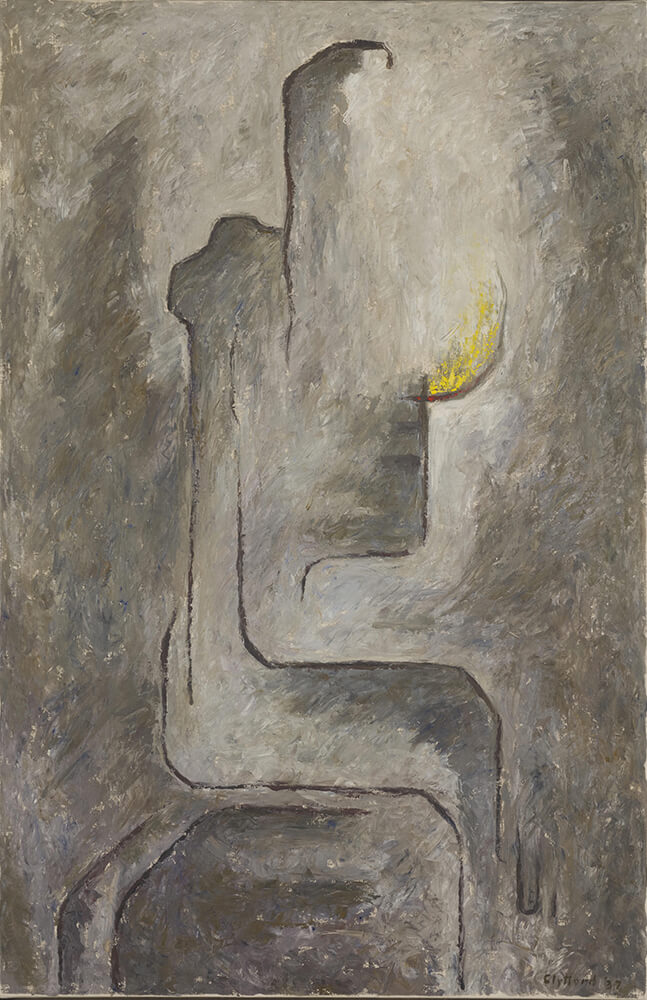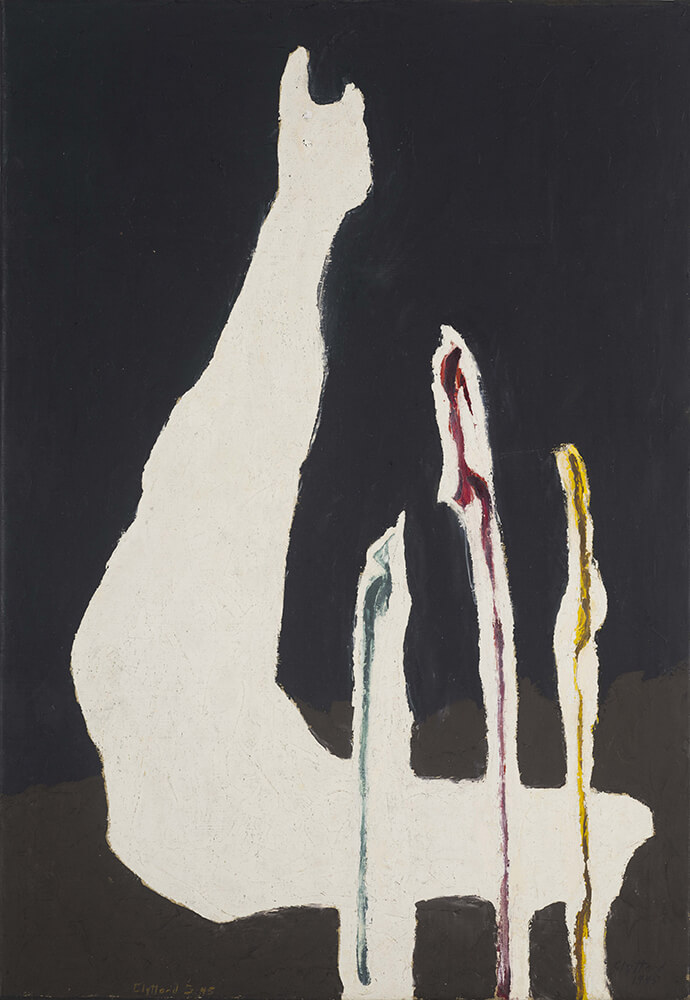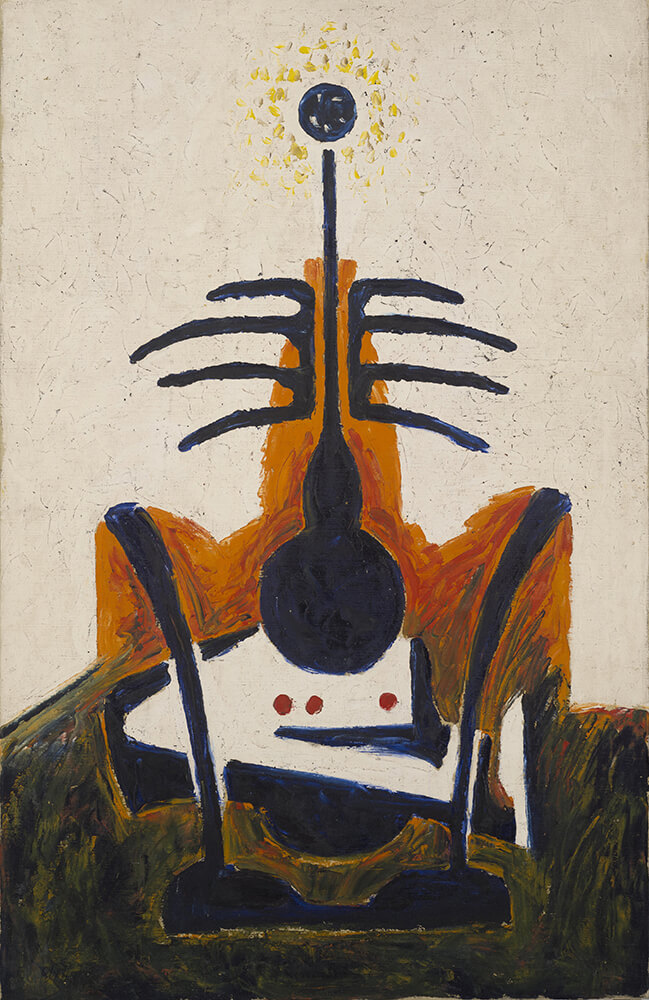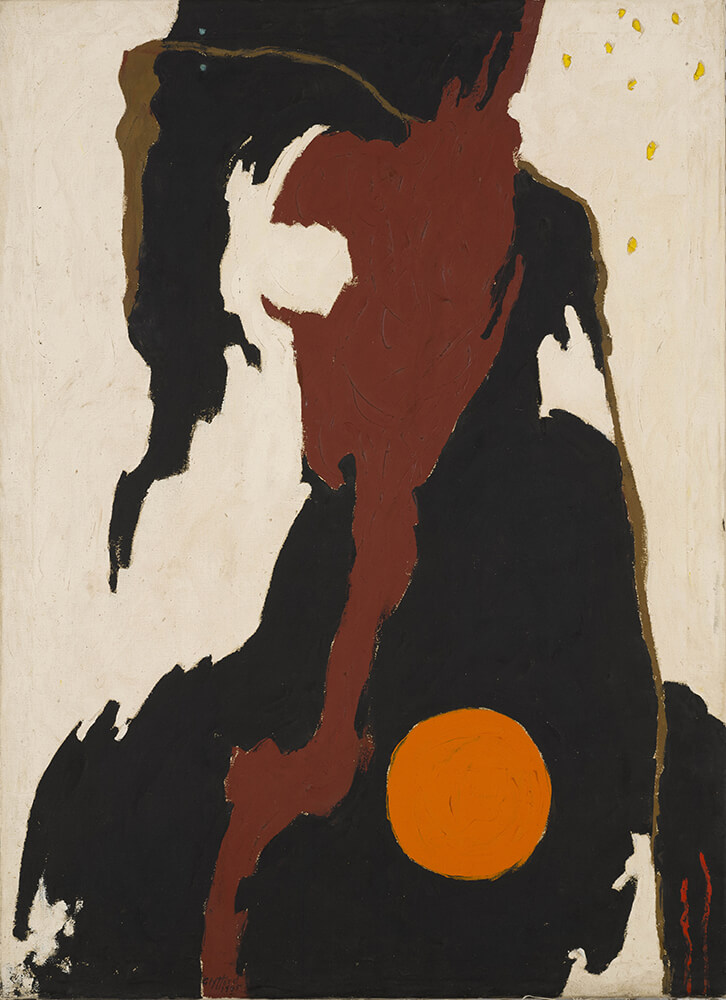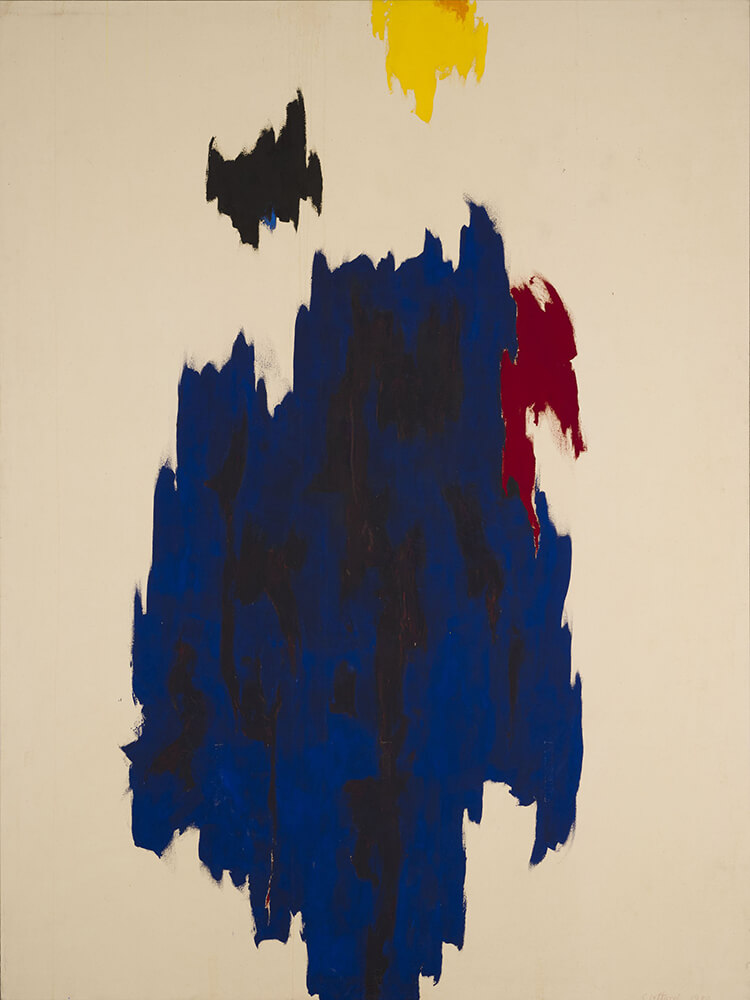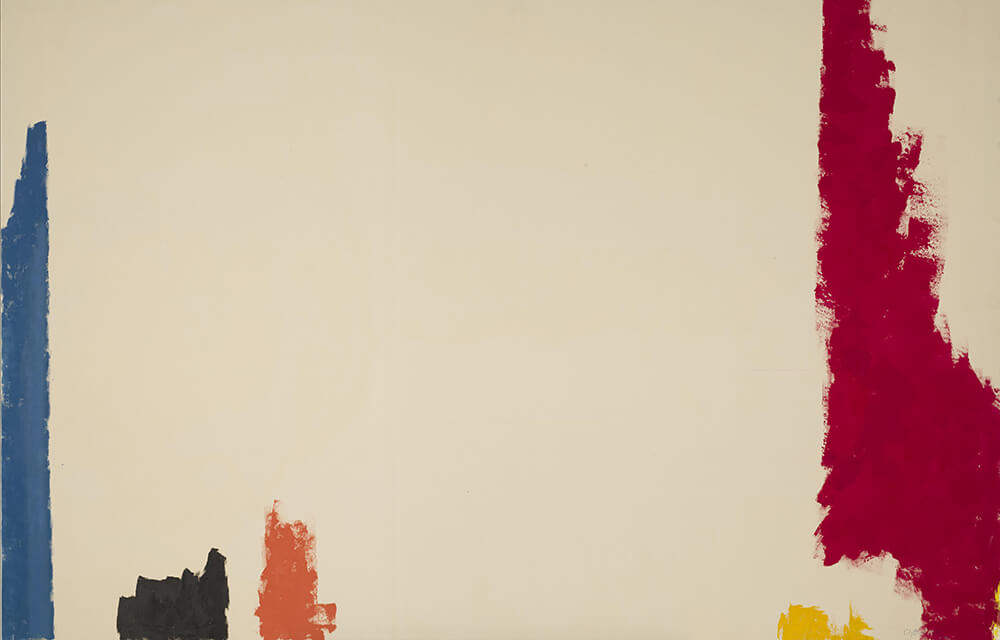
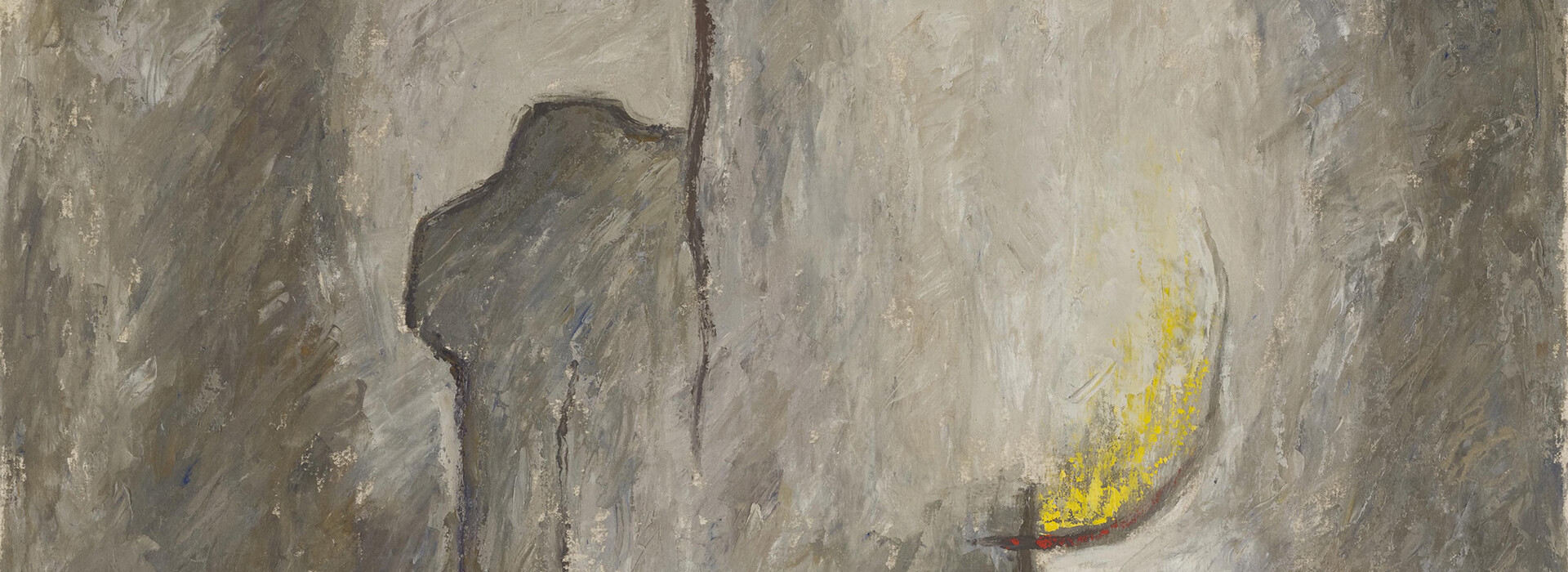
Following several guest-curated exhibitions, the Clyfford Still Museum reunites our community with a full chronological presentation of Clyfford Still’s work, with spotlights throughout on his experimentation with a range of techniques and materials.
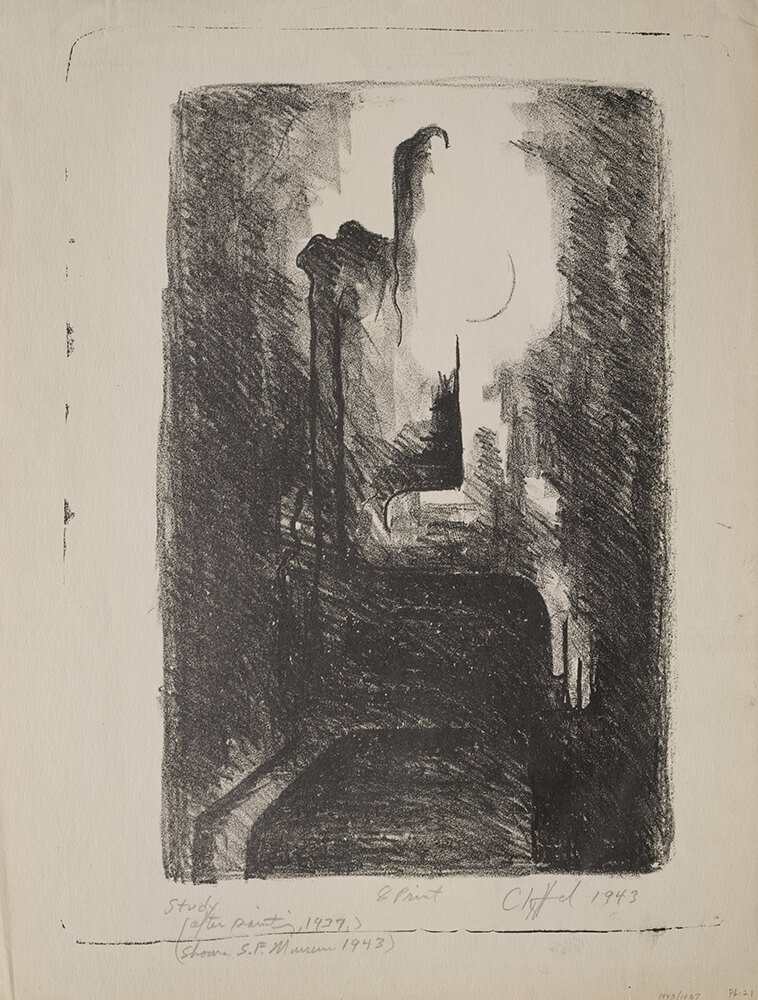
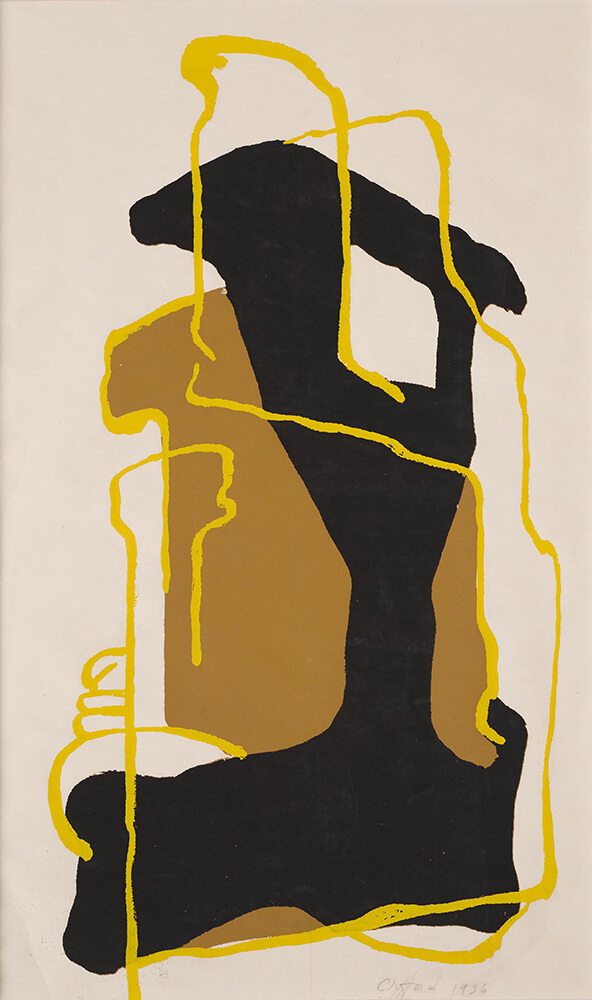
Still became renowned for his distinctive use of oil paints, applied with a metal trowel. Throughout his career, however, he experimented with a variety of materials and techniques. Throughout his career as a professor, he learned, practiced, and taught printmaking, at times capturing the composition of a painted work in these paper-based media. He executed sketches sometimes on paper or on window shade early in his career, while he had the time and space afforded to him to experiment in residence at Yaddo in the thirties; these works he would bring back to the studio in Washington State to draw upon for his larger, more ambitious paintings of the period. In his late career, he explored the use of latex paint, which was applied neither with a brush nor a trowel but with rollers of different sizes. During his time in Maryland, he also intensified his use of pastels on construction paper during the winter to continue honing his eye and hand.
The Still has an unusual opportunity to show how the artist tested new strategies and materials over the course of a long life. By exploring the techniques Still explored during specific moments in his artmaking, we begin to see how the professional, geographic, architectural, and material settings he created for himself often motivated his exploration of specific artistic strategies.